
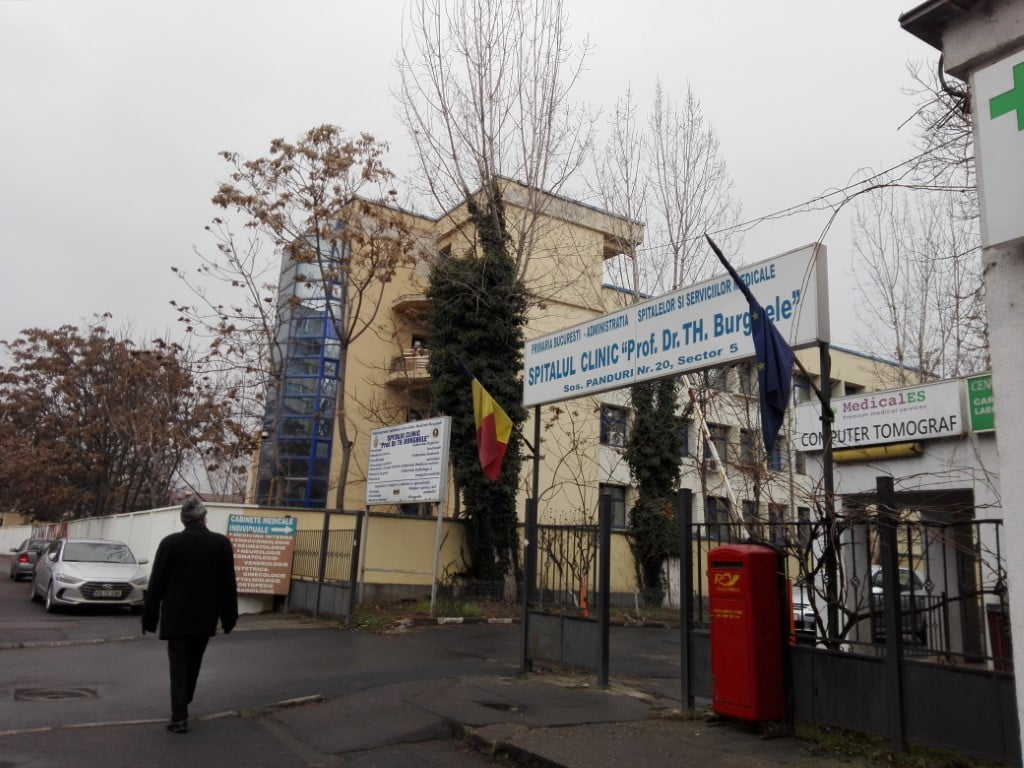
 The Clinical Hospital „Prof. Dr. Theodor Burghele” is one of the medical units in the Capital where in surgeries professional equipment is used. The unit is known both in the country and abroad due to the fact that it applies a new method of treatment for the elimination of “kidney stones”. The use of the lithotripsy device, with which the hospital is equipped, makes it possible to perform painless procedures in which patients do not need anesthesia.
The Clinical Hospital „Prof. Dr. Theodor Burghele” has a long history, considering that its birth year is 1942. And throughout this history it has marked many successes in medicine in Romania.
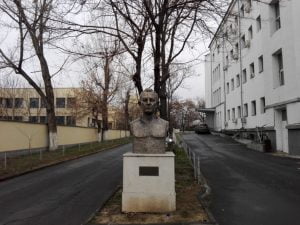
It must be mentioned, from the beginning, that the health unit, which today is called the Clinical Hospital “Prof. Dr. Theodor Burghele”, was initially called “Sf. Joseph”, and after 1948 – Panduri. The name was given to it in 1991, 14 years after the death of Professor Theodor Burghele, who is the father of this elite medical unit.
The hospital was built by the Congregation of Catholic nuns in Germany
The establishment of the hospital was decided in 1939, but it was not until 1948 that the actual activity began.
I said that the birth year of the hospital is 1942, because at that time the building was built by the Congregation of Catholic nuns from Germany, who founded here the Hospital “St. Joseph”.
By 1944, the hospital’s interiors were already completed, but in the meantime the destination was being transformed into a warehouse for the German army.
When the armistice of August 1944 on the goods of Germany and Italy was signed, the USSR wanted to take over this building. However, huge efforts are being made by the Roman Catholic Archbishop and it is possible to transfer the building, for a period of nine years, to the Congregation of the Oblate Sisters.
Following this happy event, Professor Theodor Burghele succeeds in implementing his plan to develop a new clinic in which to treat, in particular, urological diseases. Thus, St. Joseph Hospital develops step by step, being set up several sections, including general surgery and urology, radiology laboratory, endoscopy room, emergency room, hematology, biochemistry and microbiology laboratories.
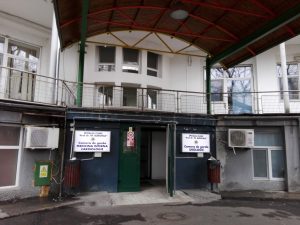
The hospital wrote history in Romanian medicine due to the fact that some of the greatest specialists from us were trained within it. The medical unit is also worth mentioning because here the preparations were made to carry out the first kidney transplant in Romania. The operation was carried out in 1980, at Fundeni Clinical Hospital, by Professor Eugen Proca, who was also trained in the hospital known at that time as Panduri.
In fact, the space that had been prepared at Panduri for kidney transplantation was used in another way. Thus, it was readjusted for the endourology activity, which Professor Valentin Neagu had already begun in 1974. Also, experimental surgery, dialysis and nuclear medicine sections were developed here.
The device that breaks the “kidney stones”
In 2018, the health unit was equipped with a device that allows a new method of treatment in the case of “kidney stones”. It is a lithotripsy device, which allows a modern, minimally invasive treatment of urinary lithiasis. Basically, with this extremely complex device, patients get rid of kidney stones without surgery and leave home the same day.
Among the first patients to undergo such an intervention is Adriana Hoancă. After the treatment, she said that the procedure lasted less than half an hour. “Honestly, I expected it to be much more painful and unpleasant. However, there are some pains at the bearable limit. I left home immediately after the surgery. I encourage anyone who is in this situation”, declared, in August 2018, Adriana Hoancă.
At present, the medical unit is undergoing a major modernization, the municipality making massive investments in the development of this hospital.


