
 At 22 Spătarului Street, there is a house that attracts everybody’s attention due to the special energy it emanates. Melik House is the place we will visit today. This is an opportunity to discover a house, a collection and a museum
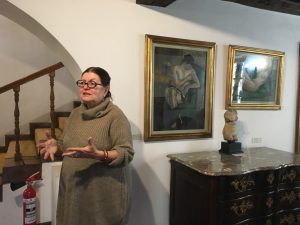
In this time travel, our host is Mihaela Murelatos, curator of Theodor Pallady Museum.
The story of a fairy-tale house
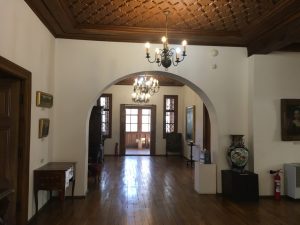
Considered to be the oldest residential house in Bucharest, Melik House has many stories imprinted on its walls, awaiting to be released.
Mihaela Murelatos tells us that it was built around 1760, and the name of the street on which it is comes from the rank of its first owner, that of “Spătarˮ (In mediaeval Moldova, the “Spătarˮ was the keeper of the royal sword and bludgeon, commander of the cavalry and second-in-command of the army after the voivode, the translator’s note). “The name of the boyar is not known, only his rank was preserved. After the death of this boyar, which happened in 1815, his descendants sold the house for 1,400 thalers to an Armenian merchant, Kevork Nazaretoglu. The property was initially purchased for the purpose of widening the yard of this Armenian trader but he liked the house, so in 1822 he renovated it and moved into it. The year above the entrance door, 1822, is the year the house was first renovated, not the year it was built”, says the museum curator.
Until 1847, when he died, Kevork Nazaretoglu lived in this house. Later, the property was taken over by one of his sons, Agop, who, in the same year, offered it as dowry to his daughter. Ana married the architect Iacob Melik, and, from this moment on, the building in Spătarului Street, at number 22 is known as the Melik House.
Many important events in the history of Bucharest are related to this place. During his studies in Paris, Iacob Melik met many of the future patriotic revolutionaries with whom he had a close relationship of camaraderie. This is how, one year after his marriage to Ana, in 1848, he will hide in the attic of the Melik House three of the leaders of the revolutionary movement: Ion Heliade Rădulescu, C. A. Rosetti and Ion C. Brătianu. “The rulers of the time did not think of searching the leaders of the revolution in the Armenian slumˮ, says Mihaela Murelatos.
Because he was a participant and supporter of the revolution, Melik is forced to leave the country. He takes the path of exile with his wife and father-in-law, but also with 69 other revolutionaries. He is away for nine years, a period he spent in Istanbul and Paris.
After the long exile, the architect returned to the country in 1857. He found the house in a bad condition so he decides to renovate it again. Therefore, 1857 is the year in which the house is renovated for the second time.
“The Melik spouses lived in this house until the end of their lives. They had no children. Ana survived her husband. She died in 1913 in a fire, even in this house. But four years before, in 1909, she wrote a will expressing her wish that, after her death, an asylum for the poor women in the Armenian community would be organised in the building. This happened, but not immediately after her death, but seven or eight years later. Seven years were spent in trials for the house, from 1913 to 1920. They went to court, the Armenian community to which the house was left against a grandson and a great-grandson of the husband. A great-grandson, Eugen Melik, wins temporarily the house in 1920 and renovates it, through the architect Paul Smărăndescu, when water is brought into the house, electricity is installed and the fence to the street that exists nowadays is erected. One year later, Anna’s will gathered strength and, according to her wish, the house became an asylum for the poor women in the community. And it served as an asylum until the end of the 40s, that is, until ʼ48-49ˮ, explains our host.
From that moment, the building is inhabited by tenants but, in 1970, the state made an important decision that would save the Melik House again. It is decided that the building shall house the art collection that the spouses Serafina and Gheorghe Răut bequeathed to Romania. At the same time, the Armenian community relinquishes the house in favour of the National Museum of Art of Romania, on condition the building is renovated and open to the public as a museum.
Through the Department of Public Monuments, the building is renovated, being brought to its current aspect, and in December 1971 it is open to the public, housing the collection of Serafina and Gheorghe Răut.
After the 1977 earthquake, all the collections that were at that time in Bucharest are housed in the Romanit Palace, where the Museum of Art Collections was created. Therefore, the Răut collection leaves the Melik House, the building remaining closed until 1994. It was reopened under pressure from the Armenian community, which requests either to have the property restored or to have the house transformed into a museum again.
The collection that transformed the Melik House into a museum
It can be said that the Răut spouses, through their collection, contributed in time to the rescue of the Melik House, among other people.
Once we became aware of the impressive story of this building, it is time to discover other interesting stories that refer to the works of art that we can admire by visiting the Melik House.
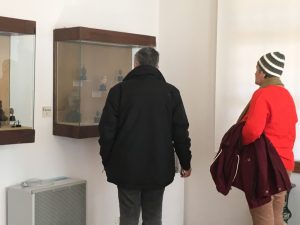
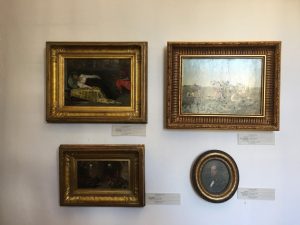
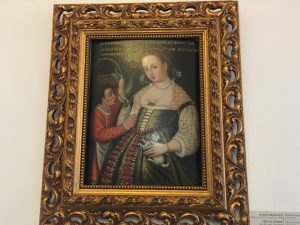
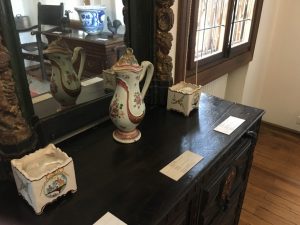
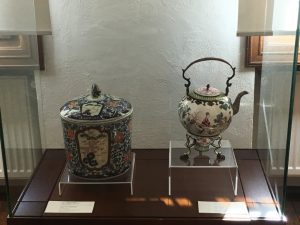
Paintings belonging to the French, Dutch, Italian schools, 18th-century furniture, pieces of European and Oriental ceramics adorn the museum where we discover some Theodor Pallady works from the Parisian period.
Mihaela Murelatos mentions that the Răut spouses never lived in this house, at any time, but it seems that they knew it and liked it enormously.
Between the Melik House and the Serafina and Gheorghe Răut collection, it was just a happy meeting, which resulted in an intimate museum, in which the visitor not only enjoys the exhibits that are made available to them but they can take advantage of the moments spent inside the house to charge energetically, the whole building having a positive vibration that you feel right from the entrance.
There are many stories here and they are all part of our history. The Răut spouses, who donated the collection, were great art lovers. During the interwar period, Gheorghe Răut held the position of director of the Marmorosch Blank Bank branch in Paris. After the resounding bankruptcy of this financial institution, he remained in the capital of France.
The Răut spouses lived in a building in 12 Place Dauphine. The painter Theodor Pallady lived upstairs and they became close friends.
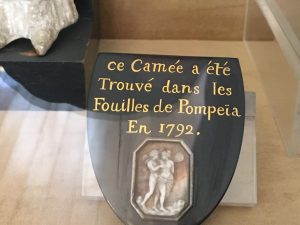
In the winter of 1939, Pallady left Paris and his apartment remained in the care of the Răuț spouses. The artist was in a moment of deep pain because his friend and model Yvonne Cousin had just died. The painter preferred to take refuge in the country. He never returned to France, dying in 1956.
Therefore, when the Răut spouses donated to the Romanian state, at the end of the ’60s, two thirds of their art collection, all the objects that were left in Pallady’s apartment were also sent to the country. The wish of the two spouses was that the museum should open with the collection donated by them and bear the name of Theodor Pallady. “This is why we are in the Melik House, admire the Serafina and Gheorghe Răut collection, in the Theodor Pallady Museumˮ, points out Mihaela Murelatos.
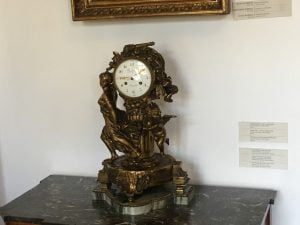
The art lovers who appreciate Theodor Pallady have the opportunity to discover, visiting the Melik House, a significant part of the graphics made by him, the museum’s collection including almost 800 such works.
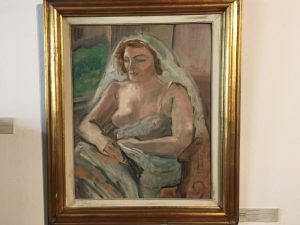
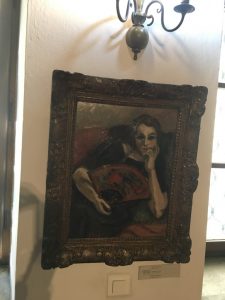
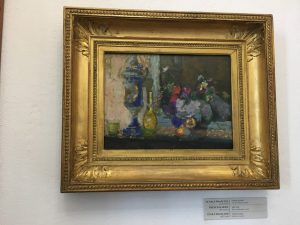
It is difficult to choose which of all these works displayed is more valuable. The ground floor of the building houses paintings signed by Pallady, the paintings belonging to the artist’s Parisian period. Among the works are the portraits of some actresses in vogue at that time, but also nudes characteristic of the author.

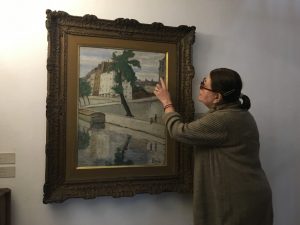
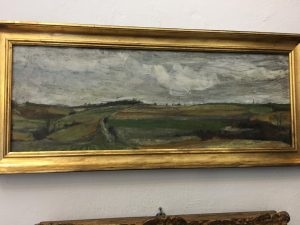
Among all these remarkable works, our attention is drawn to a special painting in which a place dear to the painter is presented: the building in which he and the Răut spouses lived in Paris. “Somewhere in the background, you can see the Dauphine Square, a place that frequently appears in the master’s paintings and graphics. It is a signed work, it is achieved during the Parisian period. It’s an oil on cardboard. Pallady painted mainly on cardboard, either on plain cardboard or on canvas glued to cardboard. The work here is painted on plain cardboard, and sometimes you can even see the material underneath. There are places not touched by the painter’s brush. It is not completely covered in colour”, explains the curator of the museum.
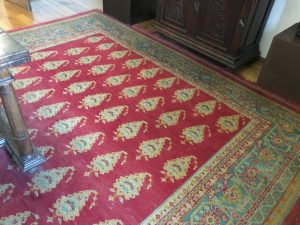
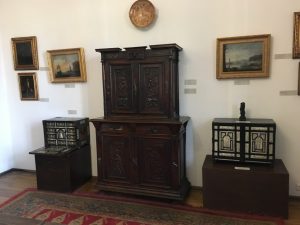
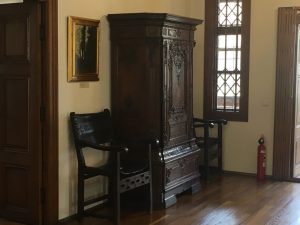
As for the furniture we can admire in the building, it is not yet known exactly whether it belonged to the Răut family or to Pallady, the painter. The pieces are, for the most part, French in character and highlight how people lived in that era. However, there is also Spanish-influenced furniture (leather chairs from Cordoba).
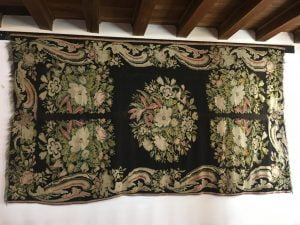
The connection with Romania is also highlighted by a series of objects that we can admire in the museum. For example, on one of the walls is exposed a carpet from Bessarabia which the representatives of the institution replace, at certain intervals, with two Iranian curtains embroidered on woollen fabric with silk thread.
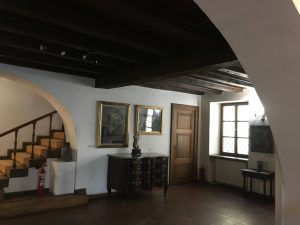
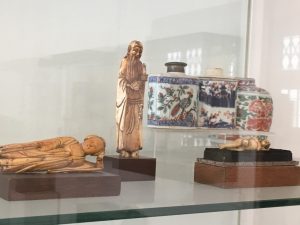
Visiting the Melik House, one can not only admire Pallady’s signed paintings but also discover, on the upper floor, European painting, decorative art, Persian and Chinese ceramics, small sculptures, Indian art objects etc. “It is a mixed, heteroclite collection, reflecting the artistic taste of the collectors and their financial resources. The works are small in size, appropriate to the dimensions of an apartment”, says Mihaela Murelatos.

Author: Ștefania Enache
Photo: Corina Gheorghe