

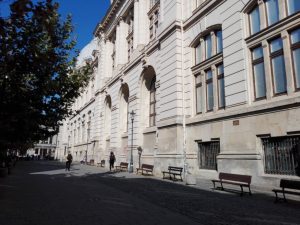
 Bucharest is also the city of students, because it is the most important university centre in the country. Today we shall tackle the University of Agronomic Sciences and Veterinary Medicine of Bucharest, one of the educational institutions that prepares specialists for the economic sector, that has undergone a spectacular development during the recent years.
In a country where, apparently, many young people are opting for domains such as Law, Management or Marketing, it may seem strange that someone wants to work in agriculture and wants to study in this field. Not that the above-mentioned choices are wrong, just that it is important that, when making the choice for a college, young people should also take into account the requirements of the labour market.
Young people who really want to develop a successful career choose their educational path that can help them evolve. As such, the educational offer of the University of Agronomic Sciences and Veterinary Medicine in Bucharest was conceived precisely in this regard. The institution has a tradition of over 165 years in agronomic education.
You will wonder what a material about agriculture is dealt with in a project about promoting Bucharest. It is not an article about agriculture, but one that highlights the fact that Bucharest is really the city of the students, and the University of Agronomic Sciences and Veterinary Medicine in Bucharest is one of the tertiary institutions with a solid tradition. Education is an important part of this city and definitely contributes to its development.
And since people’s stories are the ones that can highlight certain realities, I chose to present this university from the perspective of a graduate. We shall not quote figures or study programs. We will simply present the story of a person who has studied here.
It was a conscious decision
Mădălina Lazar graduated from the Faculty of Horticulture of this university three years ago, and now she is also attending a master’s program. In the meantime she began to work, thus perfectly combining the practical and theoretical training.
Mădălina was born in a family that, after 1989, invested in animal husbandry, her parents having a mini-farm of cows. Initially, when the question of choosing the educational path was raised, she considered several variants, but none included this university. She did not want to work in the same field as her parents.
“My high school colleagues were divided between Law, Medicine and Economic Sciences (ASE). Most were heading to ASE because they thought they would have more opportunities. In addition, they thought it was easier to study at ASE. I have to admit that each of these options seemed pretty appealing to me, but, at the same time, I felt that this is not my place. Initially, I focused on the baccalaureate exam, I was in the Mathematics-Informatics profile and the exam is more difficult than for the students who had attended a humanistic profile. What I knew for sure was that I would opt for the university centre of Bucharest. I always liked Bucharest. When I was a kid I was just waiting for the holidays to be able to come to my aunt in Bucharest. I remember being very happy when I went to Cișmigiu Park. Even today, when I want to relax, I choose to go there. I also like Calea Victoriei. I cannot say the same about Old Centre, which I find far too busy, too noisy. I prefer the quiet Bucharest, with beautiful architecture and alleys that you can walk on, quietly”, says the young graduate.
She began to seriously consider attending an agricultural college in the last year of high school. “I did not receive much encouragement, many pitying me that I will spend four years of my life in the faculty that, afterwards, will not offer me any job opportunity. I did not take into account the opinions of the devil’s advocates, so I chose to attend the courses of the Faculty of Horticulture. It was a conscious decision, taken willingly. I thought that I did not just want a degree diploma, I wanted to have a profession, I wanted to have a very narrow qualification. So today, after graduation, I am a horticultural engineer”, says Mădălina.
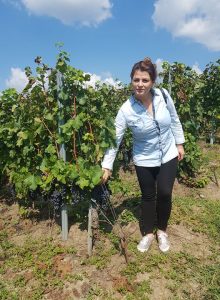
Once she was admitted as a student at this university, Mădălina had to move to Bucharest. That is how she discovered the opportunities that this city opens for a young person. She worked a lot during the faculty years because she wanted to gain as much experience as possible. She found jobs related to her field of study.
Today, despite the fault-finders who told her that after faculty, she will have to go to work “in the country-side”, Mădălina found a job in Bucharest. She is employed by a large wine company that exports worldwide. At the same time, she continues to study because she wants to specialise so that one day she can produce her own wine.
For young people coming to study in Bucharest, this city is the gateway to life. The educational offer available in the Capital is a generous one, comparable to those existing in other big cities in Europe. The fact that quality education is offered is also evidenced by the results that graduates of traditional faculties obtain in their profession. Bucharest is indeed an important university centre.


