
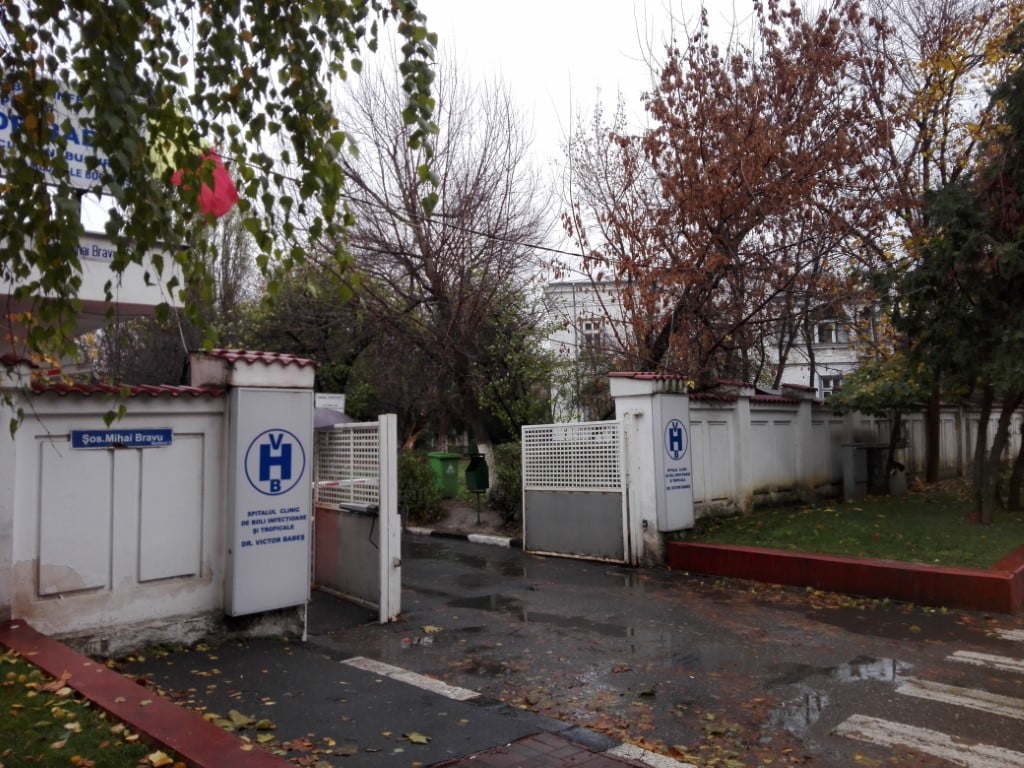
 In the medical landscape in the Capital, “Dr. Victor Babeş” Clinical and Infectious Diseases Hospital occupies a special place, because of the operation it conducts. Being under the administration of the City-Hall of the City of Bucharest, through The Bucharest Hospitals and Healthcare Services Administration (BHHSA), the healthcare facility includes, among others, a Tropical Diseases and Travel Medicine Office.
In a world in which migration of various types has become a constant, the existence of this Hospital represents a necessity, but at the same time a reassurance that certain health problems can find their remedy.
The Hospital’s History
Concerning “Dr. Victor Babeş” Clinical and Infectious Diseases Hospital it was possible to talk ever since 1956, when a necessary healthcare facility for the isolation of the cases of acute viral hepatitis was established.
Starting out from a single ward, the Hospital expanded gradually. Six new wards were built, and the healthcare facility also focused on treating the patients with “import tropical diseases,” but also of the HIV / AIDS-positive ones.
The year 1976 represents a benchmark in the history of this Hospital, because of the fact that, within “Dr. Victor Babeş” Clinical and Infectious Diseases Hospital, the Infectious and Tropical Diseases Clinic was established. The initiative belonged to the “Carol Davila” University of Medicine and Pharmacy.
In the 1976-1995 interval, the Clinic was headed by Dr. Ludovic Păun, the man who managed to modernize the hospital and transform it into a reference center in the treatment of infectious and tropical diseases.
A real visionary, Prof. Dr. Ludovic Păun also has the merit of being the author of the first book about the HIV / AIDS infection in Romania. Actually, the diagnosing of the first adult AIDS case in Romania was done in the year 1985 in this Hospital. Also, in this healthcare facility were diagnosed the first children AIDS cases (June 1989).
A mentor for scores of physicians who carry on his work, Prof. Dr. Ludovic Păun was followed in the Clinic’s leadership by Prof. Dr. Emanoil Ceauşu.
“Dr. Victor Babeş” Clinical and Infectious Diseases Hospital represents a benchmark on the national and international medical map because of the way it managed to respond to the epidemiological challenges emerging meanwhile. Hepatitis, Cholera Epidemics (1977, 1982), the West-Nile Encephalitis Epidemics (1996), or the A H1N1 Virus Flu Epidemics (2009-2010) are only a few of the dramatic episodes in our history, in which the healthcare professionals of the Hospital intervened and stopped the spread of the diseases.
The Infectious and Tropical Diseases Clinic is recognized on an international level, being admitted, since 1980, in the European Council of Schools and Tropical Medicine and Hygiene Institutes.
The Modernizations Continue
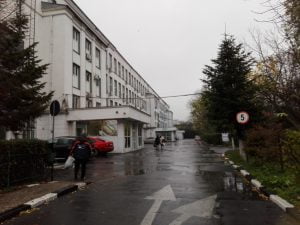
The importance of this healthcare facility in the national, but also international healthcare landscape, caused the local administrations to allocate significant funds for the rehabilitation of the Hospital, but also for its modernizing and expanding.
The most recent project, which relates to “Dr. Victor Babeş” Clinical and Infectious Diseases Hospital, targets the construction of an ambulatory that will be able to receive an average of 400 patients daily.
In the new project, it is stipulated that the new Polyclinic will feature a ground floor and one floor, and a developed area of over 1.100 square meters, 16 consultation offices, three inpatient hospitalizing rooms (with 17 beds, 12 for adults and five for children), as well as all the related functions of such healthcare facilities.
The importance of this work is a major one in the context in which “Dr. Victor Babeş” Clinical and Infectious Diseases Hospital is one of the two healthcare facilities in Bucharest focusing on infectious diseases. Moreover, here is the place where patients in the whole country get to. Furthermore, patients with tropical diseases get treatment.


