
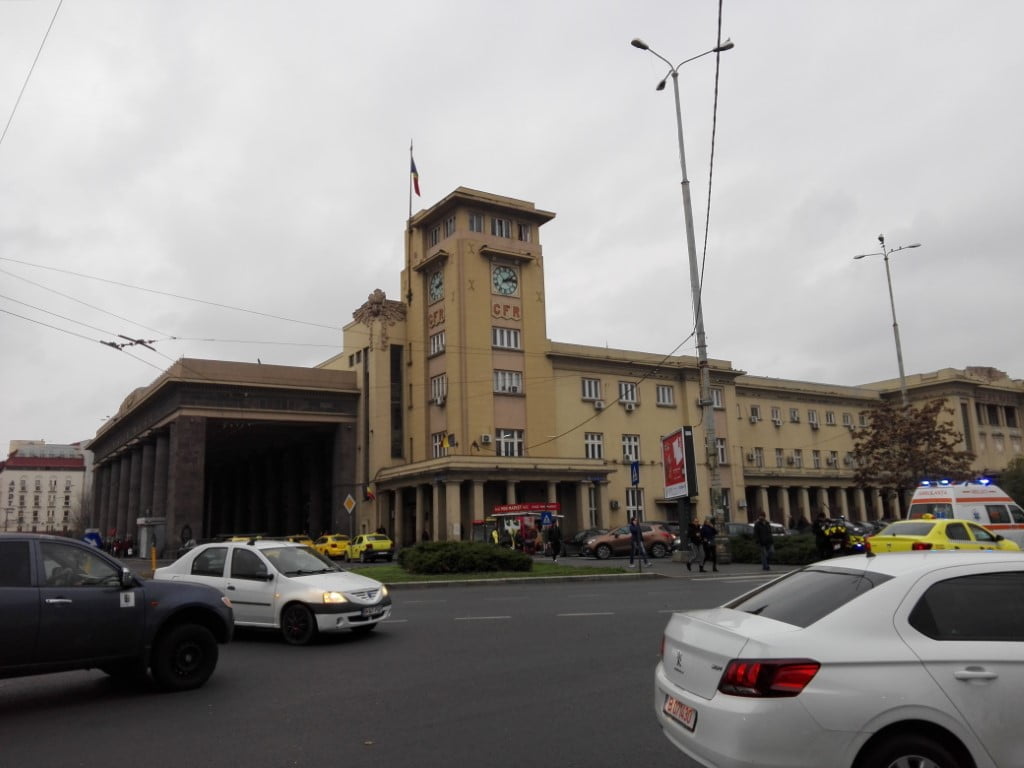
 The North Railway Station in Bucharest is the place where the roads of those coming to the Capital are going with the desire to visit the country’s most important city. Whether they are coming from the province or arriving by train to Romania from abroad, tourists make a first discovery when they see the building that houses the station.
Discover the beauty of North Railway Station
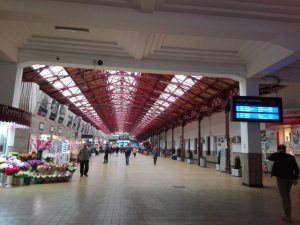
If you break away a bit of the fuss around you and stop for a few moments and look at the North Railway Station building with the eyes of the tourist eager to explore, you will have the pleasant surprise to discover a construction that has a strong historical imprint.
In the place we find today the North Railway Station was once the Railway Station Târgoviste, a construction started in 1868, in the presence of Carol I.
Bucharest’s first railway station copied the Paris pattern and opened on 25 September 1872. At that time included six railway lines.
The importance of this place is extended stage by step, and in 1883 in the Railway Station for the first time reaches the Orient Express train.
As it became a state heritage, the railway station will change its name in 1888, when it becomes the North Railway Station.
The construction that we admire today also bears the signature of architect Duiliu Marcu and has been carried out since 1937, coming to put on existing buildings.
The most impressive part of the North Railway Station is the central body, which impresses with the monumental facade that we have the opportunity to see today. The building has a neoclasic-style facade, with the center point being the huge columns supporting the construction.
The Railway Museum
And as we are in the North Railway Station, we invite you to another site of the story: The Railway Museum.
There are few who know that somewhere at the end of a platform in North Railway Station there is a museum where you can see how the history of over a century of railways has been written.
Visitors to the museum have the opportunity to discover a series of interesting exhibits: The original office of engineer Anghel Saligny, fascinating layouts of steam locomotives, the famous CFR clocks, but also many original historical documents.
The attraction in this museum, however, is the romanian railway trail demonstration Diorama.
Loaded with so much information, we leave the place to move toward one of the most popular neighborhoods: Giulesti.
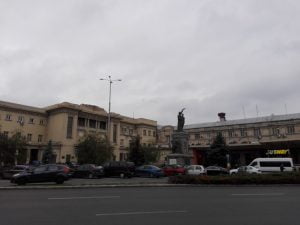
The exit from the station, however, gives us another pleasant discovery: The Monument of the Railroaders Heroes in Bucharest.
The work carried out by sculptors Corneliu Medrea and Ion Jalea was unveiled in 1923 and is dedicated to the memory of those who fell into World War I. The sculptural group that dominates the monument is cast in bronze and represents several characters: a woman, a symbol of the country, two railroader workers, a soldier, a woman and her child. The symbolism of the work is obvious and it values the importance of the sacrifice of war heroes.
We take it to Giulesti

This time instead of taking it to the center of Bucharest, we will head to Giulesti a neighborhood that many present as one of Bucharest’s most ugly areas.
However, if you really want to feel the pulse of this city, it is important to try to discover all of its facets.
The fear that we will discover a kind of Bronx from which we will not know how to escape is gradually replaced by the pleasant sensation you have when you discover the colorful life that you have felt in this neighborhood.
The Giulesti has a history that links very much with that of North Station. Walking in this neighborhood, you must not expect to see the splendor of buildings bearing the signatures of well-known architects. Instead, he will find a workers’ district, which is up by stage, once the first railway transport bases were set up in Romania.
Giulesti is the place where, immediately after the construction of the railway station began, railway workers began to raise modest homes. The neighborhood expanded gradually, but it still wears from the modesty of those times in which the working class lived here.
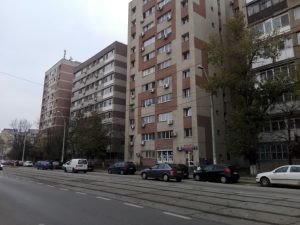
Our neighborhood today is not only dominated by gloomy blocks and streets. Somewhere on the edge is a famous construction. It’s the Chiajna-Giulesti Monastery. If you ask the people of the place about this place of worship, they will look crucified at you and urge you to go back. The monastery is surrounded by two cemeteries, but even more important is surrounded by many horror stories. It can be said that it is the ideal place for those who are looking for haunted places.
It is important to point out that the Chiajna Monastery is more than 300 years old and the construction is impressive in its form. Specialists say it is the only church that harmoniously summarizes the Romanian native and post-brancovenian architecture with neoclassical architecture.
From a ruin that dominated the area for years, the monastery was re-established in 2008, and the Orthodox Church was involved in the restoration of this jewelry. Moreover, since 2011 church services have been organized, thanks to father Athanasie Badulescu, who took over the leadership of the place. As of February 1, 2018, Hieromonk Father Iosif Petra.
Going back from the Chiajna-Giulesti Monastery to the center of Bucharest, we will realize that the city is changing, and the workers’ neighborhoods are becoming ever more vivid and full of history.


